Okay, the subject is quite simple. We are being herded in the direction of buying electric cars. So what about it? There are many arguments and angles of arguments, so the answer is not so straight forward. In this post I will explore what I find out about the actual cost of owning an Electric Car, compared to what I currently drive.
The baseline
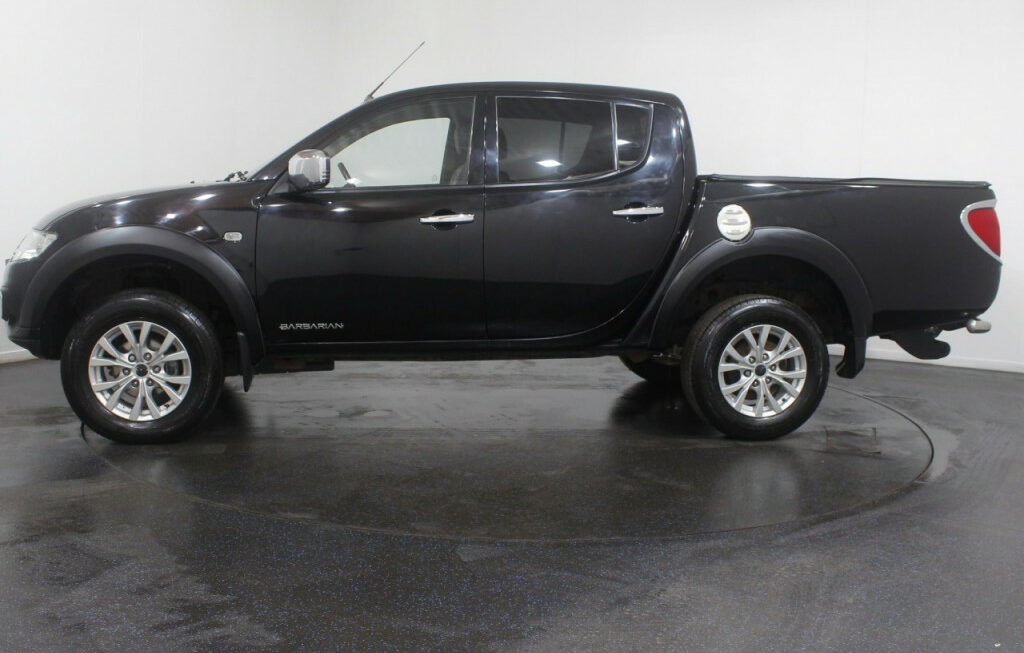
Now my current mode of transport is a 2014 Mitsubishi L200 Barbarian pickup truck. It is fitted with a 2.5 litre, direct injected, four inline, turbo intercooled engine. It runs a manual, five speed gearbox, onto a 2/4 wheel drive transfer box. The setup is factory spec and rated at 176 BHP. Driving it in 2 wheel drive, or back axle only, isn’t actually a huge saving. This is because the front wheel transmission components are not actually isolated. As a result it is actually more efficient in 4WD, odd isn’t it.
The kerb weight is 2000 Kg, so we see here that we have a power to weigh ratio of 88 HP/TONNE.
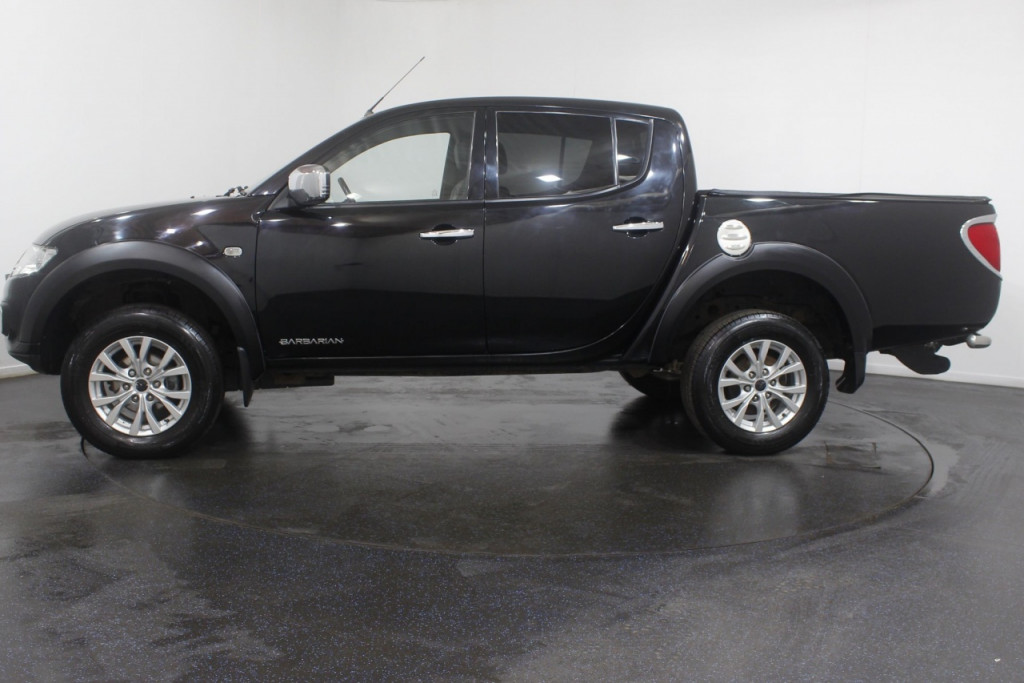
Factory specification rates it to manage 31 MPG mixed driving. The eco-computer agrees pretty much. However I have improved on this by perfecting what is become known as “Hyper miling” and by running the tyre pressures higher than normal. 2 BAR instead of 1.5 BAR. As a result I can manage up to 40 MPG if I get a clean run.
The fuel tank is 74 litres, or lets call it 16 Gallons. In theory I could get 640 miles before its conked out. No chance. The best I’ve got to a low fuel warning light is 430 miles and that required 60 litres (13.2 Gallons) to fill up. Based on that this gives 32.5 MPG. So in theory a 520 mile range until flame out.
My journey to work is exactly 10 miles and with the price of Diesel being £6.70 per gallon at the time of writing, then we quickly see that at best I am paying £3.35 for each days commute. Let us make that a round £4 as it is never that good. So there is my baseline.
Compared to…?
So what shall we compare against? There is no electric pickup truck, yet. So lets go for the Gold Standard of Electric Cars, the Model 3 Tesla.
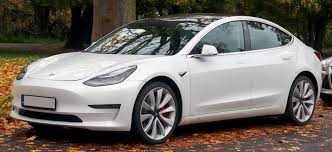
Now it is quite clear this thing cannot more 1000Kg of payload, or tow a 3000Kg trailer, but for this comparison that doesn’t matter right now. But, wait, there are several options for this car. Which one to choose. For like-for-like I am going for the Long range AWD version. I am not going for the “Performance” model.
Lets get the figures. Power output is a blistering 346 BHP. The dual motor drive has a single 9:1 gear reduction so far more efficient than a transfer case.
Weight is 1,847 Kg, mostly the battery no doubt. But that gives us 187 HP/TONNE. That is pretty damn impressive.
Range depends on the test method, but the worst case I’ve seen is 350 miles. I assume that would be until dead so really the L200 wins with 150 miles. But that’s assuming I need all that range, which I never have.
The big question, running cost.
Now to running costs. 29 KWh per 100 miles. Therefore that would make my commute 5.8 KWh. Okay, so right now I pay 17p KWH, so that gives a commute cost of 98.5p. Call it a quid. Or a quarter of the price of the L200. But I know that the cost of electricity is heading to 28p KWh, so this will become £1.62.
That’s not as good as I would have hoped to find to want to pay out something like 40 grand to gain.
Boo Hiss, be fair, you don’t need 4×4 to drive to work.
Fair comment, lets lower the sights on the Tesla and go for the Short range, Rear Wheel Drive model.
Power output is 279 BHP. Weight is 1,835 Kg, surprisingly not that much lighter. Power to weight ratio is 152 HP/TONNE which beats the L200 fair and square.
Range is about 300 miles, but we already knew that this would suffer against the L200.
Running cost is 23 KWh per 100 miles. So my commute becomes 4.6 KWh, and at the expect rate the cost will be £1.29. That would be roughly 20% better.
That’s not a lot better to be fair.
But this model is cheaper at about 35 grand, which is 12% cheaper.
Conclusion
The running cost saving, at best is 68%. In reality the cost would be better as the service costs would be less. The depreciation of the vehicle price is currently good as there is high demand. But the end of life price would yet to be discovered, as would the end of life mileage.
This exercise is one of discovery. Would this get me buying a Tesla? For cost alone, no. Would I buy one anyway? Probably not as I think they look ugly.
Then there are the other arguments to electric cars. What is their running carbon footprint if they are changed off the grid alone? What is the environmental damage of building the car? What about refuelling times? These questions are not subject to this article, but I hope to look into this soon.

2 thoughts on “Drive electric – Part 1”
Comments are closed.
The FCE truck has an added running cost (service, ware and tare) equal to the fuel consumption per mile. I would like to see the face of all those that have a Tesla when they will need to change batteries ($$$$$)!! You can charge the electric vehicle at work!!
I can’t get my head around work charging. Surely that is a “Benefit in Kind” and the tax man will want to know about it. Additionally, why can I not take my ICE truck to the garage a fill it up with Diesel on the work fuel card? What is technically the difference? The battery has to last the car life. In the Tesla it is in the floor pan, as in, cheaper to buy a new Tesla than replace it.