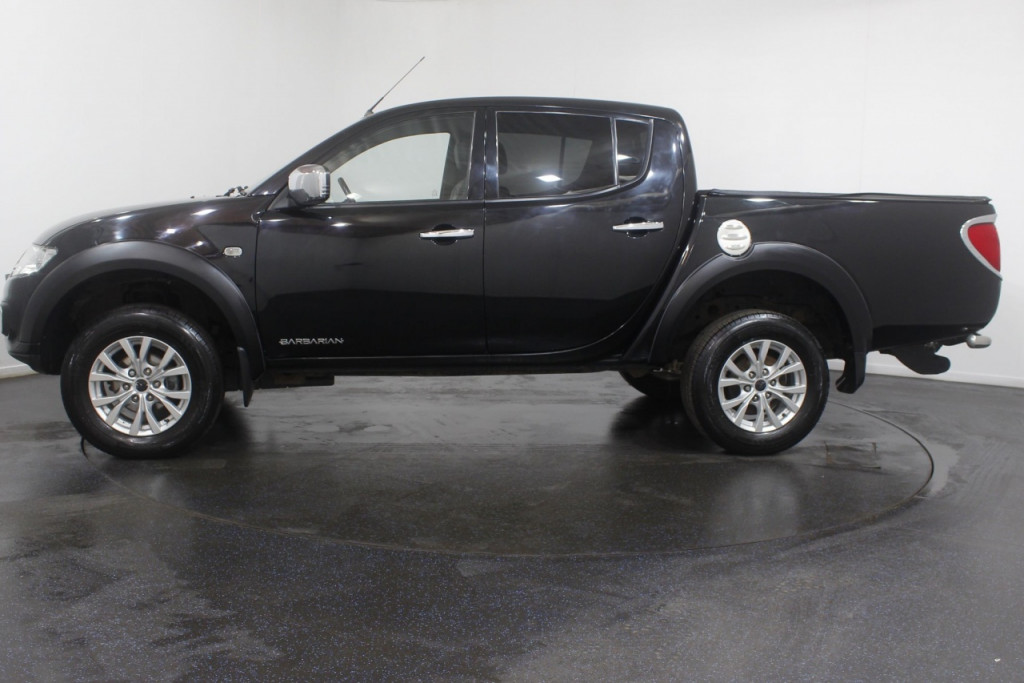
Why would I say that?
So I’ve been driving the L200 as carefully as I can. “Hypermiling” they call it. Light on the throttle, steady acceleration, keep the revs right down, use inertia and road conditions as efficiently as possible. I can get 38 MPG on the computer, and if I get behind a lorry and have to stay at 40 MPH then I get over 40 MPG. Happy days!
In these times there is a risk of a shortage of diesel. I don’t want the tank to go too low, just in case. I noted that I’m down to just below half and I’m near Sainsbury’s. Time to fill up. Now I should point out that when I mean “fill up”, I really mean it. I fill to the top of the filler tube such that I literally cannot get another drop in. As a result I know exactly how much I’ve used.
So I fill up. 46 litres, and it cost me £80. Ouch! That’s why this subject is such a pressing one. At the end of the day its the pressure on the wallet that drives change, not the environment. Am I wrong?
My other habit is I reset the trip meter immediately after the fill up and I do so here too, noting 300 miles.
Now, 46 litres translates to 10.11 imperial Gallons. Which leads to a result of 29.6 MPG, average.
Wait, What? That is flipping terrible! This is the true figure and it leads to a conclusion. For Diesels, hypermiling doesn’t work. Why? I am reasoning it is the lower revs, I’m out of the power band and the engine is not efficient there. It also places a whopping big question mark over what the computer is telling me as well.
As my colleague is regularly heard to say “Bloody compuers, ya can’t trust um, bloody, bloody compuers”.
He might have a point.

2 thoughts on “Vehicle economy – Its all a bit pants really”
Comments are closed.
Reset the computer fuel consumption average and then do the hypermiling. You will definitely pass 30mpg!!
The trouble was I got the fuel consumption from the number of miles drive against the amount of fuel burnt. The computer has no effect on this.