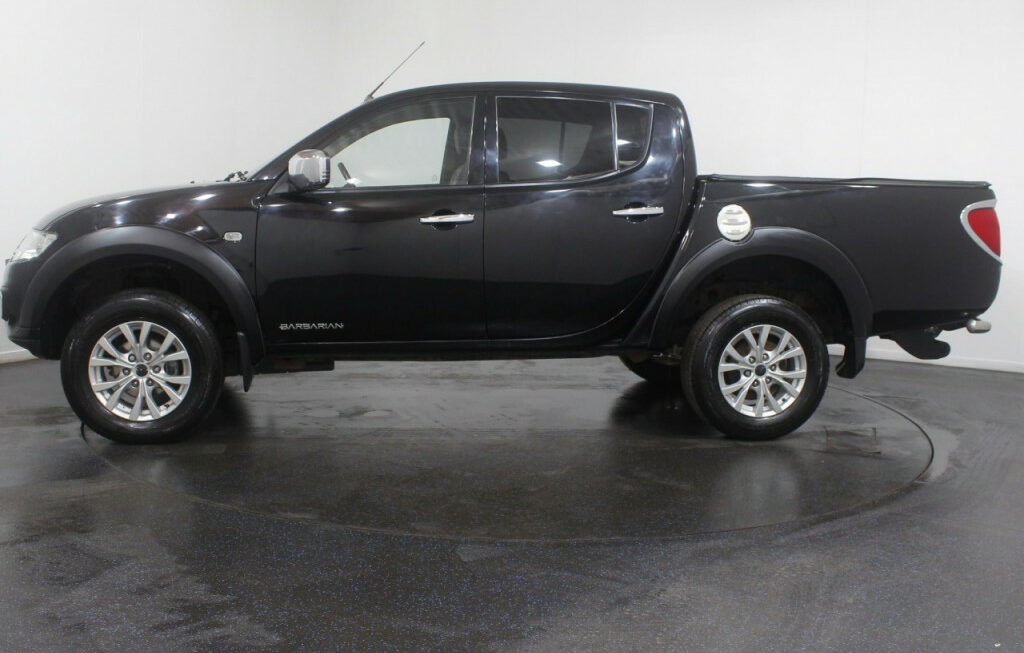
Further to my thoughts regarding the transition to Electric Cars. In this post I am going to explore the thinking on is buying an Electric car actually a “Green” thing to do? You might think that is a “No brainer” of a question, but is it?
Build Carbon Foot Print
When you choose to build a product, no matter what that is, you will expend energy and resources in doing so. Currently our manufacturing industry is not “Green”. I mean it is trying to be but it still relies on Fossil fuels and other materials derived from fossil fuels to conduct its build role. It does not matter if this were an “Internal Combustion Engine (ICE)”, running on Petrol or Diesel, or Electric car (eCar) being built.
Car bodies are made out of Steel in most case. To produce steel requires a huge amount of energy, you can’t get away from that. Additionally, plastics are used a great deal, which are derived from oil products, taken out of the ground. While these do not ultimately add to atmospheric carbon themselves, they are derived from the production of mineral oils. These are likely to be the two main materials.
There are other materials in a car, many others, but in smaller quantities, and some of them nasty. Aluminium and Rubber will feature. Drilling down to the smaller raw material usage and we find such things as phosphorus, arsenic, boron, gallium, copper, gold, chromium, the list goes on.
For the ICE cars then the engine block is a significant material consumer, using either iron or aluminium. This alone uses great energy resource to manufacture.
For the eCar then there is no engine block. Happy days we think, but we must not forget the battery. This is the fundamental problem in that we cannot store electricity in its native form, which is a flow of electrons in a conductor. Actually there is a way, using a technology called “Superconducting magnetic energy storage” but the slight problem is the need to keep the device very cold, like below -200 degrees centigrade. It is heavy, expensive and highly destructive if it fails. Its not a solution for cars.
So we are left with having to take a collection of materials that can switch from one chemical condition, to another, by allowing electricity to flow through them. Then they provide electricity potential when they try to change back again. This is a rough analogy of an electrochemical cell. String many of these in a line and you have a battery. The problem is what materials to use.
Requirements of a suitable battery shall –
- have a very high energy density – The battery holds a very large amount of energy in a relatively small space. You need a viable battery that can actually fit in your car.
- have the ability to be charged and discharge, repeatedly, with ideally no degradation to the operation of the battery, no loss of capacity and no increase in its internal resistance.
- have a practical mass. If the energy required to move the battery is more than it can hold then you are onto a non-starter straight away.
The battery has always been the biggest problem to solve in all electricity storage applications.
I am not going to go any deeper into the technology alternatives because all I want to show is the environmental problems that the battery poses. Currently the chosen solution for eCars is the lithium ion battery. Its the same technology used in Mobile Phones and many other portable devices. It has all the good qualities listed above and are far superior to other technologies that we have encountered, such as Lead-Acid, Nickle-Cadmium, or Nickle-Metal Hydride.
But there is one thorn in the side of the Lithium battery, Lithium itself. There is a lot of damage, both to the land and to the climate from mining Lithium. This leaves the big question as to if the batteries production hasn’t just consumed all the carbon foot print that it was supposed to be saved by not running the car on fossil fuel in the first place. That’s the point I want to place here. There are many other issues with Lithium mining but that is out of scope.
Running Carbon Foot Print
So you have your eCar and you can plug it in, charge it up and drive where you wish with no damage to the environment. Go you! If it were true. It isn’t. Let’s explore this rather complex topic.
Compare “like-for-like”, convert Diesel into Kilowatt Hours.
Diesel fuel is very energy dense. Let’s look at this. Electricity we measure in “Kilowatt hours”, Diesel in litres. How to we compare? We can convert. Diesels energy density is 45 Megajoules per kilogram. A litre of the stuff weighs 0.86 Kilograms, so we can compute that we have 38.7 MJ in a litre. To convert to Kilowatt hours then there are 3.6 MJ in a KW/Hr, so a quick division gives us –
10.75 KW/Hrs per litre of Diesel.
This is a chemical conversion, it doesn’t account for efficiencies.
So my 74 litre tank contains 795.5 Kilowatt hours of energy. Now we can do a cost comparison.
Electricity cost per kilowatt hour at new energy cap level = 795.5 x £0.28 = £222.74.
Diesel cost = £1.77 x 74 = £130.98.
Hold on a moment! Diesel is a lot cheaper! Like 41% cheap. Give me a better argument! Easy.
Efficiency
If you get in your ICE car then the energy generation occurs in the car itself, but the engine is incredibly inefficient with something like just 30% of the chemical energy actually driving the wheels. That is why you have a radiator at the front, to dump the wasted energy. So if you consider how much is being lost then you find that my 74 litre tankful has just 327 KWHrs of useful energy. Which costs £92 on the electricity meter. Ah, that’s a better figure, I think.
That is assuming that the eCars electric motor is lossless, which it most certainly is not. However, the electric motor is better than 90% efficient and with advancing technologies this will only get better. As a result you don’t need a radiator on an eCar.
But assuming 90% efficiency then my eCar is going to lose about 80 KWHrs. That’s like £22 wasted of the £222. This is true but there are more tricks up the eCars sleeve to consider.
Traditionally when you drove an ICE car then you jump in, start up, drive from A to B and finally switch off. The engine was running, even if it wasn’t actually driving the wheels. We never gave this a thought but that was really inefficient. This was being addressed with “Start/Stop” technology, sort of. The energy being saved by stopping the engine at the traffic lights was then lost by the need to recharge the battery following the restart.
Now jump in your eCar. The motor only draws power when you accelerate or wish to hold a steady spreed on the flat, or climbing hills. No energy is drawn if you are slowing, descending a hill or stopped at the traffic lights. In fact, the operation of the brakes first uses the motor as a generator, to remove the kinetic energy of the car by charging the battery, true energy recovery. Its not without losses but it is better than wasting all the energy as heat in the friction brakes.
Weight
If I fill my L200 with Diesel I will add 63 KG to the mass of the vehicle. As I drive then I consume that fuel and the weight gradually drops. As a result my fuel economy gradually improves as I am not hauling that fuel weight. With an eCar then the battery mass is a constant, regardless of charge. There is no economic saving here, unless the driving style is adapted to make use of the additional inertia.
Where does the electricity come from the in the first place?
This is the area that I sense that the champions of eCar environmentalism choose to turn a blind eye to. After all, the eCar has no exhaust pipe, so it must be carbon zero. Let us explore reasons why this isn’t the case.
Generation
According to recent press announcements, the UK is now generating 25% of it energy needs from renewable sources, such as Wind and Solar. This is obviously a good thing. The other 75%? Well its like this –
- 42% – Gas
- 9% – Coal
- 21% – Nuclear
- 3% – Other
On the positive side, the large scale generation of electricity is going to be more efficient than little generators, such as ICE. But take note that 50% of Electricity is generated from Fossil Fuel.
Transmission loses
The power stations are not in our back gardens, fortunately, but this means that the electricity has to be transported to us over the Nation Grid. This is not without losses. While best practices are employed there are still losses. Transformers get hot, over head cables get hot and lose heat to the air, underground cables (The big ones) have to be oil cooled. All this heat is wasted energy. Remote generation will never be as efficient as local generation, methods not included here.
Conversion losses
The act of charging the car battery will involve a battery charger, which will not be 100% efficient. The losses will be heat and you could argue that if you place this in your house then you can use this heat to offset the house heating bill.
The chemical conversion in the battery is not without losses, the battery will generate heat as it charges, and again this is wasted energy. Likewise the battery will generate heat as it powers the car. 10 to 15% of the energy the is charged into the battery will be lost as heat in the battery. That is quite significant. So my “74 Litre” battery what holds 795 KWHrs will lose nearly 100 KWHrs in losses. That’s likes leaking 8 litres of Diesel, per tankful. I’m glad my real tank doesn’t do that.
How to fix the charging losses?
Quite clearly it is not possible to make the energy transfer system 100% efficient, but there are ways to improve the carbon foot print. Here is how –
- Convert the house to be powered exclusively by an “Inverter”. An Inverter creates the normal voltage at the sockets but draws the energy from lower voltage batteries. Batteries that are held inside the house.
- Use solar power to charge the house battery.
- Charge the car battery from the house battery over night. While the charging losses are still present, the transmission losses are gone, as is the use of Fossil fuelled generators.
- Where the sun cannot supply the energy needs for the day then a “short fall” is purchased from the grid as a backup.
Oh course there are all the arguments on “construction carbon foot print”, and the assumption of a massive source of cash to fund such a build, but it is a solution.
Hybrid approach
Then came the Hybrid. Use electricity for the stop/start aspect of a journey and bring in the ICE. Actually this is an efficient method. In one package you have –
- the weight saving of the Hydrocarbon fuel. Its reducing weight as it burns, starts out as much less than the constant weight of the eCar battery.
- the start/stop efficiency of electric propulsion and zero consumption when coasting or stopped.
- regenerative braking to charge the battery.
- the range of the ICE.
- Charge from an electrical outlet as necessary.
But there are disadvantages as well. They are heavier than the pure ICE equivalent and as a result their MPG, while better, is not a glowing as you might expect.
I’m considering another article on this subject alone.
Conclusions
This exercise as shown that you have to consider two argument bases independently to determine if an eCar is a feasible purchase.
Save the Wallet?
Yes. As things currently stand it will be cheaper to run an eCar than an ICE car. This is so long as you are willing to take the hit on things like –
- range between recharges being shorter than “filling the tank”.
- time to recharge. Five minutes at the pump, compared to 45 minutes on “supercharger”.
- lack of ability to tow a trailer etc.
It is reasonable that technological advances will help to address these issues, but we are not there yet.
Also, as things currently stand, it is more expensive to buy said eCar against an ICE car. That needs seriously fixing, but this is unlikely in a Capitalist environment.
Save the planet?
Two aspects to this.
- The build carbon foot print will always occur, so only change the car when the old one has worn out, not as a drive to save the planet.
- Consider investing in home generation and storage of electricity as part of the plan to drive electric.