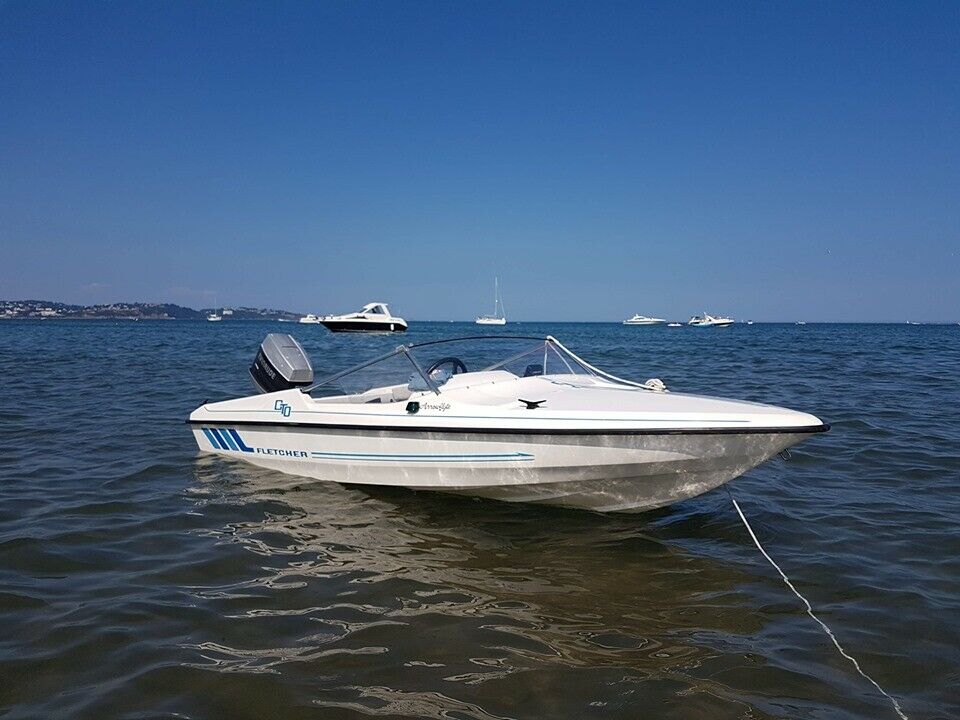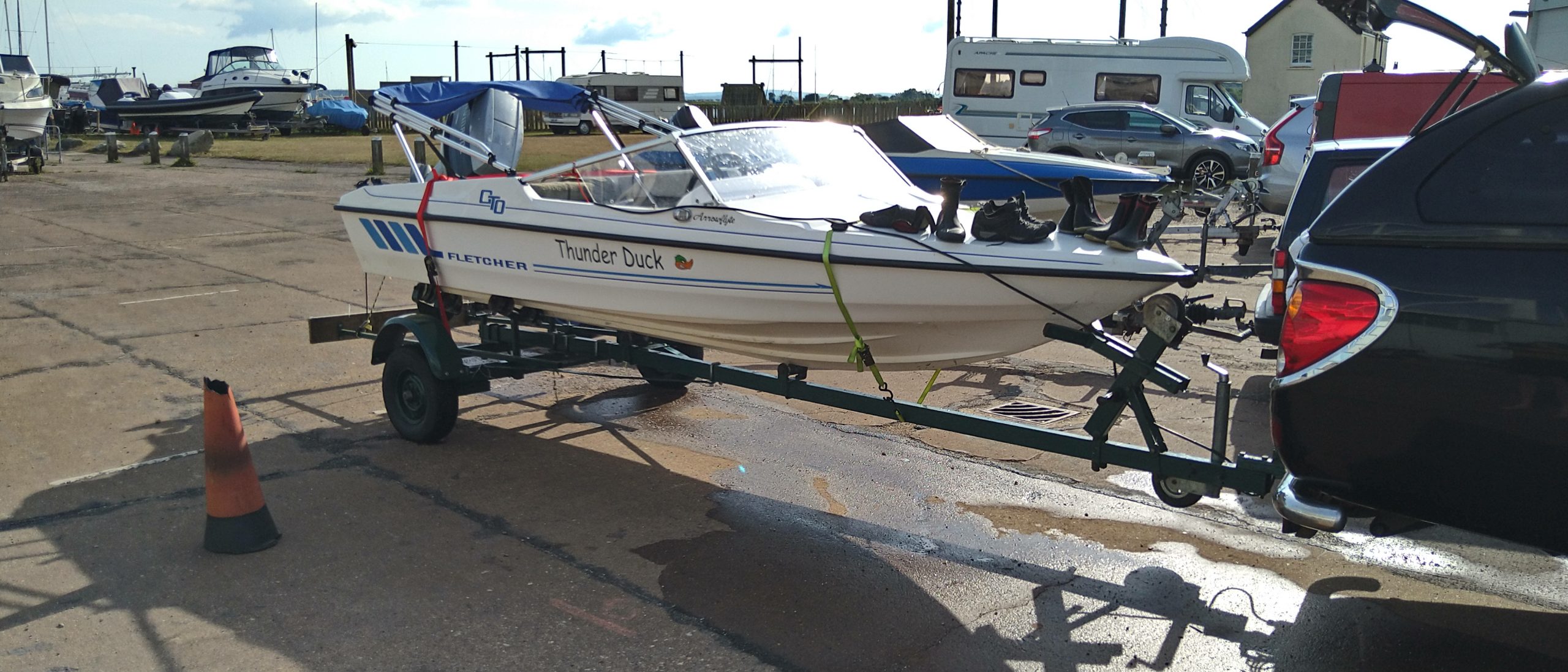
Its been a long while since I posted on here about Thunder Duck. I guess I have been spending my time “doing” rather than wasting the day light in writing about it. However there is a lot to tell.
The first launch, at Bucklers, and a near disaster
With the boat all mechanically repaired and wired up we could wait no longer to trying her on the water for the first time. We took her down to Bucklers Hard on the Beaulieu River to use the slipway. I’ve attempted to find the date, which I can’t immediately identify but it was July 21.
The engine had been tested in the tank and I had kind of figured out how to start her, but it was hit and miss. I backed her down the slipway and with the trailer submerged I gave her a shove and off she went. I’ve since learnt that this isn’t the way to do it, but we’ll get to that later. In this case she floated for the first time with Holly holding the line.
With the car and trailer in the car park I waded to TD, got in and attempted start up. It was a bit of a challenge and noisy, but I got her running. I then managed to get her to the pontoon but not before fiddling with the idle control to keep her running in “idle drive”. Holly and Jan boarded and we cast off.
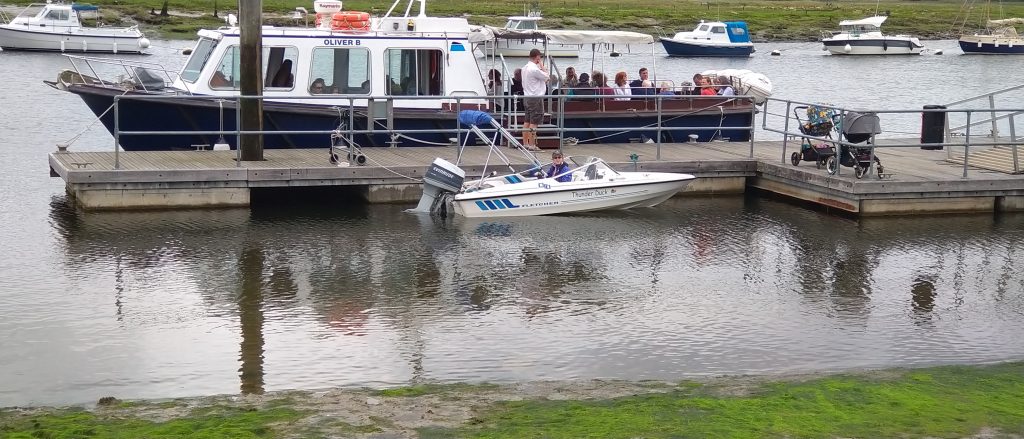
I “was” going to just run up and down the river by the marina but there was several vessels starting out for the Solent so we got in the convoy. The engine seemed happy and I was making 4 knots on “Forward idle” and needing a little bit to make the 5 knot limit. Others didn’t seem to care about this so much but I didn’t know the water so we took it steady.
After about 30 minutes we made it to the mouth of the river and entered the Solent for the first time. I turned her to Port, facing clear water and throttled up. The engine picked up, the bow came up and within seconds we were “on plain”. Wow!!! After about 30 seconds I throttled back until she came off plain and stopped. What to do?
On the horizon was Cowes and in addition the masts of Tradewind Voyages’ Golden Horizon, a massive five mast tall ship, were visible. SHe was moored outside of Cowes harbour. Got to see this. So I turned the boat and throttled up again.
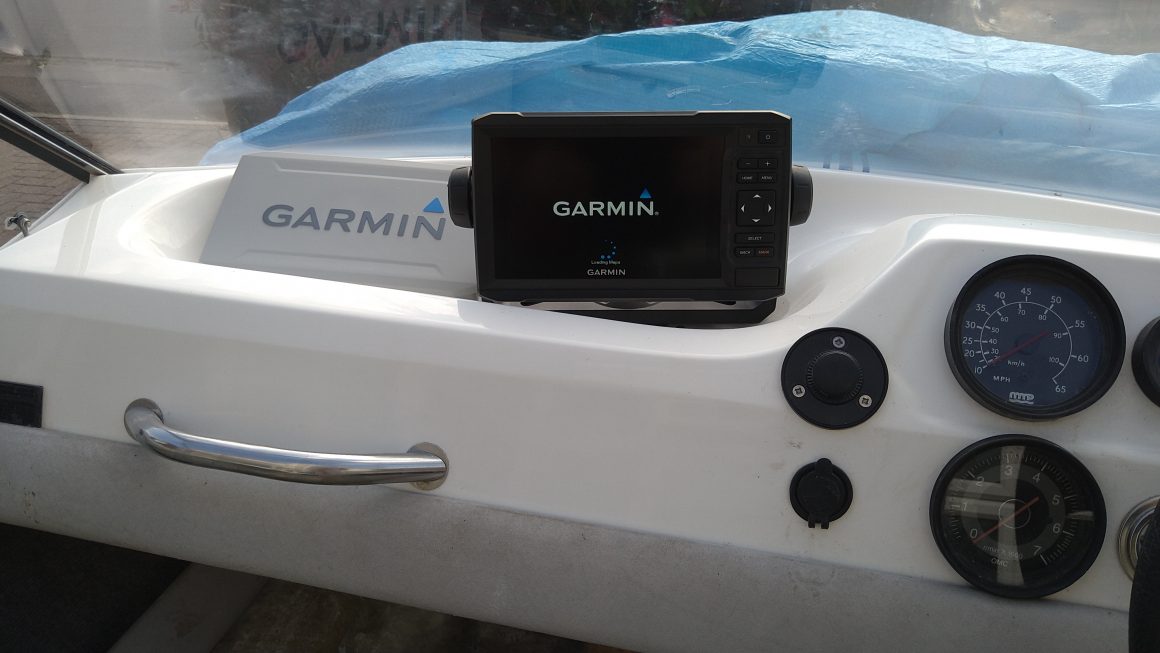
Only she didn’t pick up very well and certainly didn’t plain. I ended up at full throttle with no joy and a worryingly sounding engine. I know enough about two strokes to know this one was in trouble and I knew we would be in a lot of trouble if she failed now. So leaving her at full throttle I turned back into the river and headed back to the marine. We were against the tide but managed on 4 knots on the Garmin. There was a very strong smell of petrol and all was not well at the back.
I managed to get her back to the marine and only then announced that we had a serious problem that needed investigating. I decided to moor on the visitors pontoon. That’s when we really got into problems. Throttling back and turning to come along side, the engine quit. As it turned out, that was our lot for the day. A few words on what happened then.
I was bow on to the pontoon, the tide was going out and I was being swept towards a much bigger craft. Fortunately the Harbour Master had heard the engine fail and came running to see what happened. We threw him a line and he help pull us in and tie up. After consultation they launched a Dory and proceed to setup an “along side tow” to get poor TD back to the slipway. We tied her up on the pontoon to wait for the tided to come back up to allow recovery.
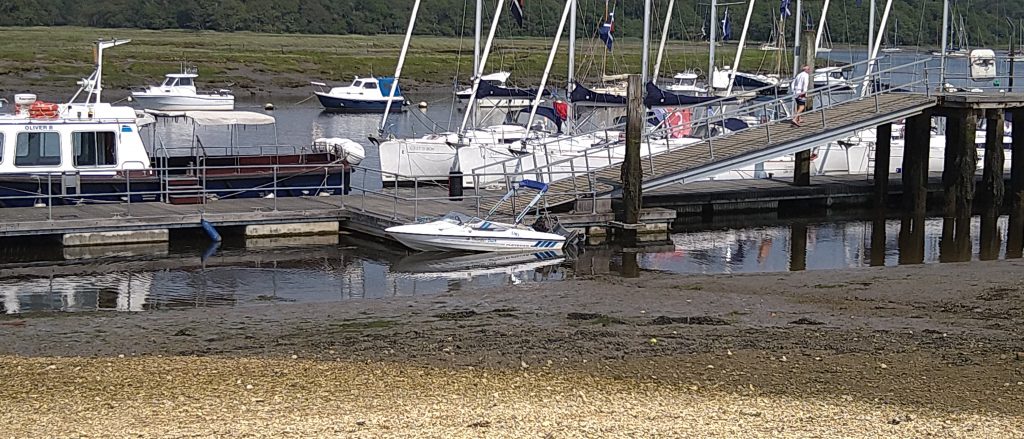
During this time I investigated the engine. There was a worrying slackness in the crank shaft. Had we thrown a “Big end”? There was nothing I could do, TD would not start. When the tide came back up a helpful paddle boarder took a line to the slipway to pull TD to the trailer. The winch did the rest and we plodded sadly home, thankful to be back on land.
Engine work
So what went wrong? The investigation began, first with a compression test.
| Cylinder | Pressure |
| 1 | 110 psi |
| 2 | 120 psi |
| 3 | 125 psi |
Not a lot wrong there. A feel about with the crank revealed that the slackness was actually the backlash in the bevel gears in the gearbox. The “Big ends” and “Mains” seemed tight.
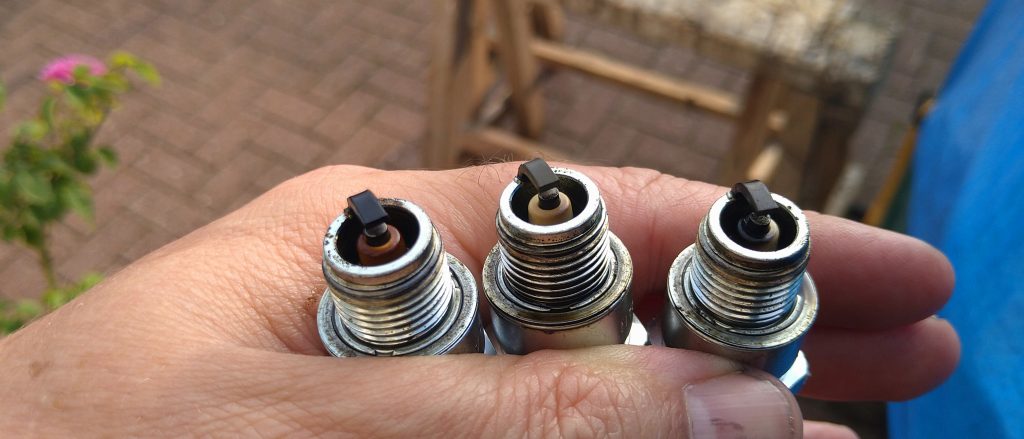
Then I checked and cleaned the plugs. Nothing wrong here either.
The next thing to happen was all the carburettors came off. On the bench each one was stripped and it was quickly determined that all three had partially blocked jets. Also one of the output pipes on the priming valve had snapped off. Additionally there were several fuel leaks from the fuel distribution pipes.
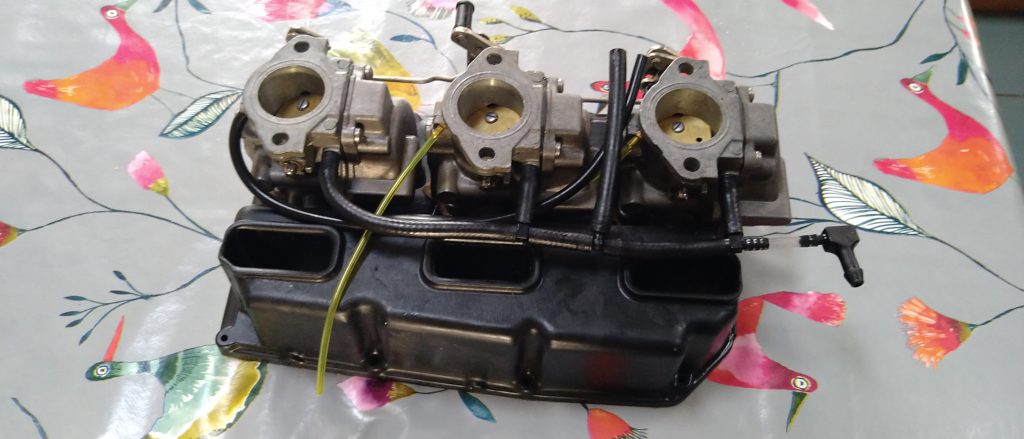
So a few EBay orders later. The pipework was all secure, the priming valve was rebuilt and the carburettors refitted to the engine. The engine was test run and started up once more, sounding better but not great.
Second launch, at Bucklers, and so much better
18th August 2021 – So to try again. We launched once more and start up was better. Ruth came this time so with everyone on board we trundled up the river to Beaulieu. We didn’t make it as the tide was going out and we were running out of water. So we turned around and headed back down river. Ruth and Jan didn’t like the fumes so we put them ashore at the marine. Holly and I try to take her down to the Solent.
The journey down was fine with the engine behaving itself. As we got to the month of the river we could see that the Solent was raging pretty well. We started out into it. A mistake. The wave tops were higher than the boat and we were getting pummelled. So we had no choice but to turn around and head back.
Getting back to the Marina we had lunch with the others, then formulated a plan. The sea state was supposed to be improving and I really wanted to know if TD could plain again. So we loaded all the reserve fuel and Holly and I set out down the river. As we got into the final section, with about 1NM we realised the river was kicking off on one so we knew that the sea was likely to be worse. It seemed unlikely we would get out onto fast water this time either.
But, I realised we were alone out there. Nothing in front, nothing behind. This had to be done, even though we were breaking the rules. I throttled up, TD picked up and got on plain and I kept her plaining until we were almost at the mouth, upon which a Yacht turned into sight so I slowed down again. We had plained for about two minutes at 22 knots and the engine was still fine.
I went out into the Solent. Getting better? No, getting worse. We turned around and headed back. I tried a couple of times to attempt to accelerate to plaining speed. She picked up but I shutdown again as there were other boats about.
We got back and recovered TD onto the trailer. A successful day.
Third launch, at Calshot, and it all went so wrong
26th August 2021 – Tim and Jan were on the IOW for a weeks holiday. So Holly and I took TD down to Calshot Spit for the first time. The conditions were excellent to get onto fast water and try her at speed. We had a passage plan prepared and all was ready. We would meet J & T at Cowes.
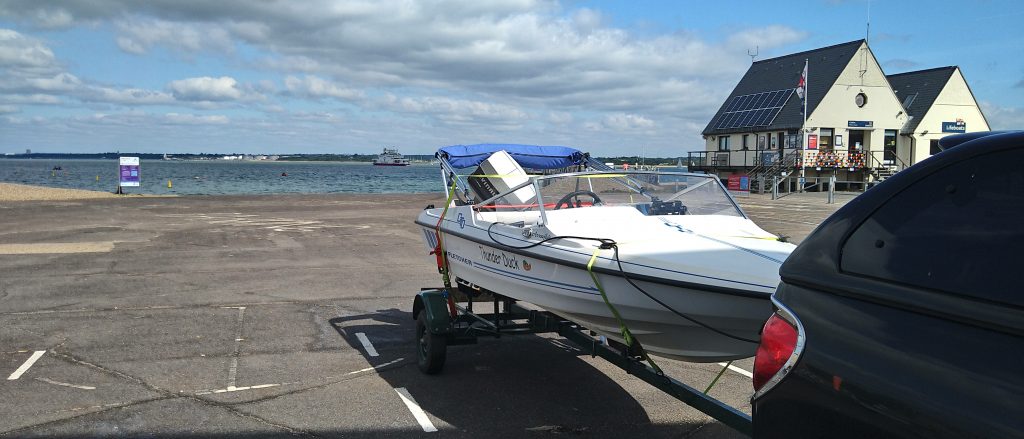
TD was made ready and I backed her into the water as before. I pushed her off the trailer and left Holly to hold her as I parked the car. When I returned I found Holly struggling with TD aground on shingle. This was the work of the IOW ferry. I got in and tried to start, and tried and tried. It wasn’t happening, not one splutter. What was going on?
Eventually I had no choice but to get the trailer back and with a lot of wrestling we managed to get her back on the trailer by wading waist deep.
Now remember I said about pushing off the trailer isn’t the way to do it? Yeah, well, you should really get the engine running before you let her go, then if she doesn’t start you still have her. I know NOW!
Now back in the car park I spent about three hours battling with that engine. What was wrong I couldn’t determine. The plugs were wet, she was flooding. But there was spark. I drained the float chambers and reprimed the fuel system. No joy there, again she flooded. No hint of any burn. A couple of guys stopped by to help. Nothing could be made of it.
So in the end we had to pack up and plod sadly home once again.
More engine work
Driving home I was running things through my mind. It was almost as if this wasn’t petrol that she was trying to run on. Made no sense. The fuel in the tank was partly what we had run at Bucklers, and topped up with fresh fuel from BP in Chippenham.
When I got home I got some tissue paper and soaked it in the fuel taken from the fuel line connector to the engine. Then, with this on the drive I used a gas lighter to light it up. It totally refused to burn. It was water. Like, how???
So, the weekend was a few days on the IOW and I visited Bembridge Marine Engineering for advice. They too scratched their heads but asked if I had a water separator. They reported that the majority of the engine failures they deal with is water in the fuel. I bought, what turned out to be an over-priced separator from them.
On our return I fitted this to TD and primed it up again. A engine start up test was conducted and she fired up!!!! Aughhhhh. So then I drained the filter and checked, no water. Isn’t that the way?
Following that I spent time experimenting with the engine, shutting down cylinders, one at a time. I discovered that she was running on No. 2 and No.3 only and that No.1 was not only not contributing much but was also very noisy from the piston rings. By adjusting the throttle balancing I could bring No.1 into play. It sounded smoother but it was still noisy.
Forth launch, at Calshot, to success
So the next weekend we took Duck back to Calshot, this time with Jan as well, and we tried again. This time she ran. So we followed our original passage plan and made Cowes. It wasn’t as smooth a sea as before and we were getting a bit of a thumping, but we got there. We check the fuel, which was fine so we left Cowes and made for Wootton Creek. Here we came alongside the pontoon at the Royal Victoria Yacht Club and were made very welcome. We had some lunch and a rest as I pondered over the engine issues when we came along side. TD wouldn’t idle properly and had stalled a number of times, requiring some one on the pontoon to assist in pulling us in (again).
We eventually departed and made our way as directly as we could back to Calshot. This was a lot of skip and splat but was otherwise uneventful. Only when we came to cross the Southampton water and we hit the wake of another motor boat did things get more interesting, and wet.
We recovered the boat and made out way home, everyone agreeing we had had a good day.
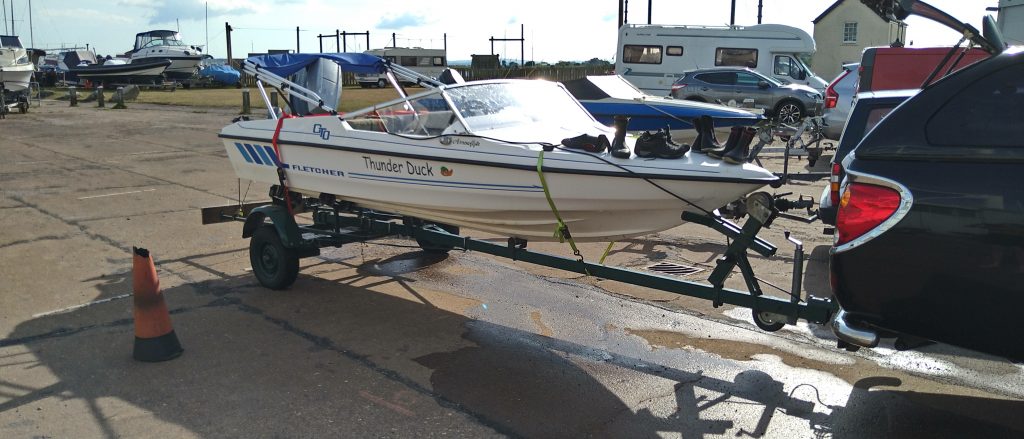
The dilemma, and the solution
The problem was this No.1 cylinder. It was clearly not happy and I wasn’t over keen to find out what might happen if we were to really open her up. To rebuild the engine was out of the question. 40 years old and American. Parts were available a huge expense. It seemed the only solution was to replace the engine entirely.
Getting a new power plant
Then I spotted on the Fletchers Owners Group on Facebook that a chap in Chichester was selling his 2003 Mercury 75 and the price was good. So I got in contact and on the 19th September, we went down to investigate. The engine was just what we needed and included the remote, cables, loom, clocks, the lot. I agreed to buy it.
Now things got interesting. As I had agreed the suggestion was made that if I helped with the strip out then I could take it there and then. I transfers the money and we began the work. All was well until we got to taking the engine off the boat. This was not straight forward as it was, as it turned out, 130 Kg. We ended up conducting a controlled crash onto the drive. It was “phone a friend” time. With three of us we got the engine into the back of the truck and loaded everything else up. The job was done and we headed home.
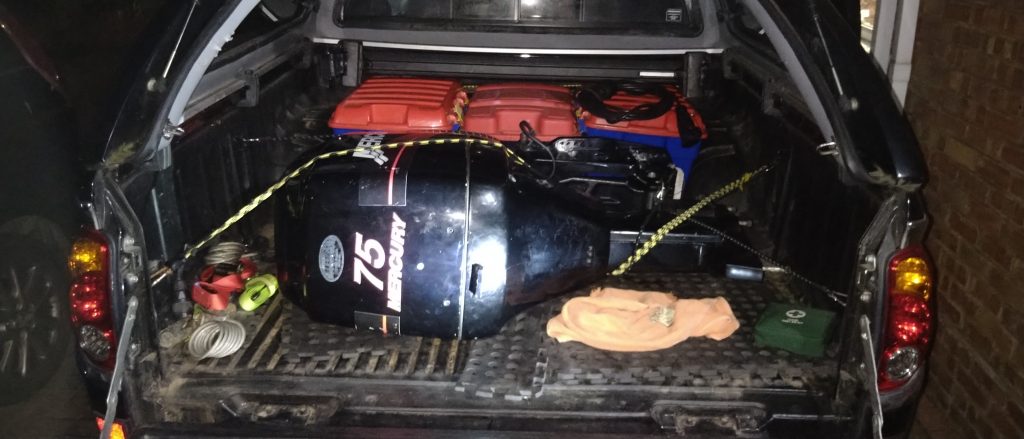
Engine swap out
Monday the 20th September and the engine was still in the back of the Truck. I went to work. A friend there offered to lend me his engine hoist, so I went down to his place to pick it up. Fortunately we could move the engine to make space.
I got home and got straight to work. First to uncouple the old Evinrude and lift it off the transom. Them place it on the garden out the way. Next arrange a sling to allow the hoist to lift the Mercury engine, then carefully lift it out the back of the truck. Then place it on the transom and get the bolts in.
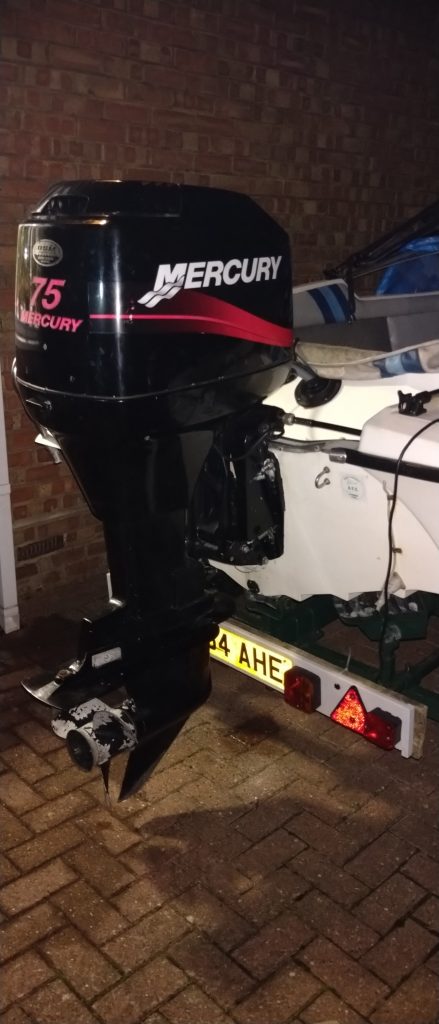
Over the next couple of days I stripped out the Evinrude control gear and electrics and fitted the new ones. The control cables were way too long so I bought a shorter set, which was much better.
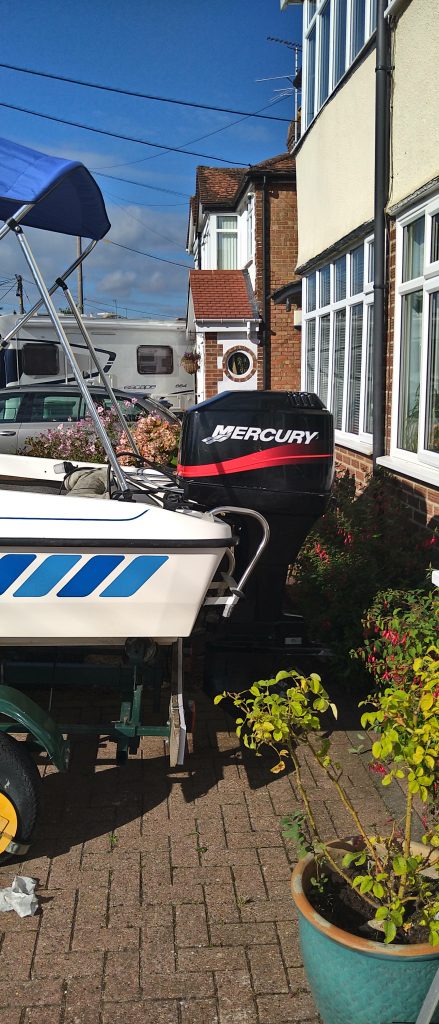
Finally a tank test. The fuel system was primed and a turn of the key and she roared into life!
Fifth launch at Bucklers, but there is a new issue
Back to Bucklers once more on the 26th September with Jan and Holly. TD was a different boat. The engine ran sweet and reliably. But she was arse heavy. This was very notable. The Evinrude was 118Kg, the Mercury 130Kg, it was messing up the balance, especially at off-plain speed, where I couldn’t see where I was going due to the bow being in my face.
We trundled down the river and out into the Solent. It wasn’t flat but it was good enough. We powered up and plained to Cowes. No worries, lets head for Wootton again. I started on the way, but then Jan spotted we were low on fuel.
A quick about face and into Cowes to check this out. Yes very low. I loaded the reserve fuel but we didn’t have enough to get back so I trundled into the Fuel Pontoon and topped up.
Well now it was clear we were not going to Wootton so we headed back to Bucklers. That journey had consumed 25 litres of petrol. We clearly need a bigger tank.
Research reveals why. Mercury build a 90 Hp engine, and then derate it to 75 Hp by changing the carbs. While it is only 15 Hp more than the Evinrude was supposed to be, the displacement has gone from 0.8 litre to 1.4 litre. Hence the additional weight. Additionally these engines don’t seem to change their drinking habits, even at low speed. They are far happier at high speed with the toe down.
Fuel system upgrade
So now I am collecting parts to build TD a bigger fuel system, and it aims to kill two birds with one stone. The 23 litre tank is coming out from the back of the boat. A new 70 litre tank is going into the bow to help balance the weight distribution. With this comes an electric fuel gauge, a fuel filler port in the bow cap, a tank breather vent, and a fuel cut off valve.
More to follow.